
Published by DFW Collaborative Behavioral Health | Arlington, Texas Reviewed by the Clinical Team member Susan Davis at DFW Collaborative Behavioral Health, PMHNP-BC
You’ve heard the phrases. Go with your gut. Butterflies in your stomach. A gut-wrenching decision. For centuries, people have instinctively sensed a link between the digestive system and emotional experience. It turns out they were onto something more profound — and more scientifically precise — than anyone imagined.
Over the past decade, researchers have built a compelling body of evidence showing that the gut and the brain are in near-constant dialogue, and that the health of your digestive system may play a significant role in the development and severity of depression, anxiety, PTSD, ADHD, bipolar disorder, and more.
For residents across Arlington, Texas, and the greater Dallas-Fort Worth metroplex seeking answers about their mental health, understanding this connection isn’t just fascinating — it may be directly relevant to your care. At DFW Collaborative Behavioral Health, we take a whole-person approach to psychiatric treatment, and the brain-gut axis is one of the most exciting — and practically important — frontiers in modern psychiatry.
Here’s what the science actually says.
What Is the Gut-Brain Axis?
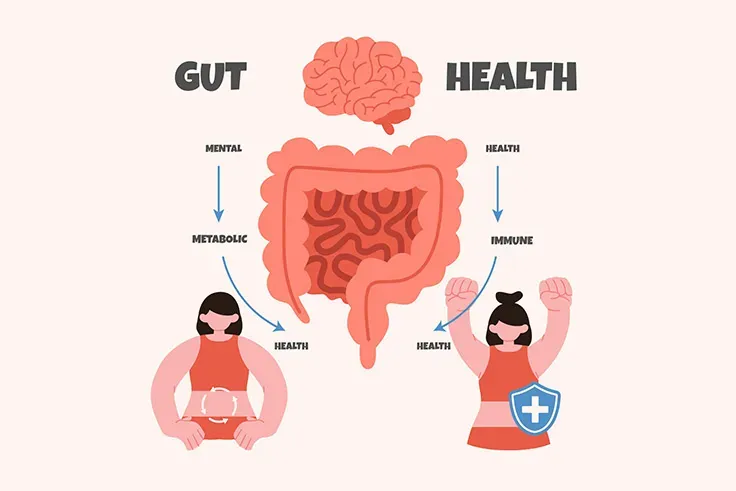
The gut-brain axis is not a metaphor. It is a concrete, anatomically defined, bidirectional communication network linking your gastrointestinal tract to your central nervous system. It operates through multiple simultaneous channels: neural signals, immune messengers, hormones, and microbial metabolites — chemical compounds produced by the trillions of bacteria, fungi, and other microorganisms living in your digestive tract.
That community of microorganisms is your gut microbiome — approximately 38 trillion microbial cells that collectively influence digestion, immune function, inflammation, and, increasingly, brain function and mental health.
The primary physical highway between your gut and your brain is the vagus nerve, the tenth cranial nerve and the longest nerve in the body. Running from your brainstem all the way into your abdomen, the vagus nerve transmits signals in both directions — but the traffic is strikingly lopsided. Roughly 80 to 90 percent of vagal signals travel upward, from the gut to the brain, not the other way around. Your gut is sending more information to your brain than your brain sends back. In the most literal neurological sense, your gut has a lot to say.
The Gut Is, Quite Literally, a Second Brain
Your gastrointestinal tract contains an estimated 100 to 500 million neurons — more than the spinal cord. This extensive neural network, called the enteric nervous system, can regulate digestion, perceive pain, and coordinate complex digestive functions entirely independently of the brain in your skull. The term “second brain” isn’t poetic license. It’s an accurate description of a neurological system with genuine autonomous capability.
But the enteric nervous system doesn’t operate in isolation. It is in constant communication with the central nervous system — and the gut microbiome acts as a mediator in that conversation. The bacteria and other microorganisms in your gut produce neurotransmitter precursors, metabolites, and signaling molecules that directly influence brain chemistry and, by extension, mood and mental health.
Perhaps the most striking example: approximately 90 to 95 percent of the body’s total serotonin is produced in the gut, not the brain. Serotonin — the neurotransmitter at the center of most conversations about depression and anxiety — is primarily a gut chemical. When the microbiome is disrupted, serotonin production and regulation can be compromised, with direct downstream effects on mood. This is not a peripheral concern. For anyone managing depression or anxiety, the health of the gut may be part of the clinical picture.
The Neurobiotic Sense: A 2025 Breakthrough
The science in this area is moving quickly. In August 2025, researchers at Duke University published findings describing what they called a “neurobiotic sense” — a newly identified system through which the brain can respond in real time to signals from gut microbes. Rather than a slow, diffuse process, this represents a specific, fast-acting communication channel between microbiota and the central nervous system.
This discovery adds to a growing picture in which the microbiome is not a passive bystander to brain function but an active participant — one capable of influencing neural responses rapidly and specifically.
In a separate 2025 study published in a peer-reviewed journal, researchers discovered that mice with elevated gut serotonin showed less anxious and less depressive behavior — more exploration, fewer signs of hesitation, greater activity. When the vagus nerve was surgically disrupted, those mood benefits disappeared entirely. The gut’s serotonin was influencing mood through the vagus nerve pathway, not by entering the bloodstream or crossing the blood-brain barrier. It was communicating directly through neural channels.
These are animal studies, with all the limitations that implies. But they form part of a rapidly growing body of evidence pointing in the same clinical direction.
What Gut Dysbiosis Looks Like — and What Conditions It’s Linked To
The term gut dysbiosis refers to an imbalance in the composition of the gut microbiome — a disruption in the diversity and ratio of beneficial to harmful microorganisms. Dysbiosis has been linked in research to a remarkably wide range of psychiatric conditions.
Depression
A 2025 comprehensive review published in Cureus found that the gut microbiome plays a fundamental role in mood, cognition, and emotional regulation through the gut-brain axis. Research in people with major depressive disorder consistently shows a distinct microbial profile: lower levels of Coprococcus and Faecalibacterium prausnitzii (bacteria associated with quality of life and anti-inflammatory effects) and higher levels of pro-inflammatory bacterial genera.
A landmark 2025 study using bidirectional Mendelian randomization analysis — a method that can evaluate causality rather than just correlation — found that gut microbiome dysbiosis is a causative factor in depression and anxiety, not simply a consequence of being unwell. This distinction matters enormously. It suggests the gut isn’t just reacting to depression; it may be contributing to it.
Anxiety
Anxiety disorders show strong associations with disrupted gut microbiome composition, altered GABA-related metabolite production, and measurable changes in vagal signaling. GABA — the brain’s primary calming neurotransmitter and the target of several anti-anxiety medications — is synthesized partly by gut bacteria and transmitted through vagal pathways. A gut environment that can’t adequately support GABA production is, in a meaningful biochemical sense, less equipped to manage anxiety.
A 2025 scoping review covering 145 studies published in Middle East Current Psychiatry found consistent patterns of microbial dysbiosis and immune activation across depression and anxiety disorders, noting associations between gut microbiome composition and autonomic metrics like heart rate variability — a marker of vagal tone and stress resilience.
PTSD
Among the most compelling emerging findings: pilot human trials using prebiotic supplementation in veterans with PTSD showed reductions in pro-inflammatory gut bacteria alongside attenuated stress responses and trends toward decreased PTSD symptoms. Animal studies show that probiotic treatment can restore BDNF (brain-derived neurotrophic factor) expression — a protein critical to neuroplasticity — and improve gut integrity in PTSD models. Researchers now believe that PTSD may be associated with gut dysbiosis, increased intestinal permeability (sometimes called “leaky gut”), and the systemic inflammation that follows.
For a practice like ours in Arlington, where we treat a population that includes many individuals with trauma histories and PTSD, this research is not abstract. It points toward a more integrated understanding of how to support recovery.
ADHD
Gut microbiome research in ADHD is still developing, but a growing body of evidence suggests that children and adults with ADHD have distinct microbial profiles. A 2022 meta-analysis involving 1,519 patients across multiple psychiatric diagnoses — including ADHD, bipolar disorder, depression, anxiety, OCD, PTSD, and schizophrenia — found consistent differences in microbial diversity compared to healthy controls. Decreased diversity, in particular, appears across multiple psychiatric diagnoses as a common thread.
Bipolar Disorder
In bipolar disorder, research has found decreased levels of Faecalibacterium and other butyrate-producing bacteria. Butyrate, a short-chain fatty acid (SCFA) produced when gut bacteria ferment dietary fiber, has anti-inflammatory properties and supports the integrity of both the gut lining and the blood-brain barrier. Researchers at the University of Michigan are actively investigating whether dietary intervention — specifically a low-carbohydrate, high-polyunsaturated-fat diet — can shift gut microbiome composition and improve mood stability in people with bipolar disorder.
How the Gut Talks to the Brain: Four Key Pathways
Understanding the mechanism helps make sense of why the connection is so clinically significant.
1. The Vagus Nerve (Neural Pathway)
As discussed above, the vagus nerve carries an enormous volume of gut-to-brain signals — influencing mood, stress response, emotional regulation, and the brain’s inflammatory state. Vagal tone (how well-functioning and active this nerve is) is associated with resilience, emotional regulation, and lower rates of depression and anxiety. Activities that stimulate the vagus nerve — including deep breathing, exercise, and certain dietary patterns — are supported by this biology.
2. Neurotransmitter Production (Biochemical Pathway)
Gut bacteria produce or regulate the production of serotonin, GABA, dopamine precursors, and other neuroactive compounds. They also produce short-chain fatty acids (SCFAs) like butyrate and propionate, which cross the blood-brain barrier and directly influence brain function and neuroinflammation.
3. The HPA Axis (Stress Hormone Pathway)
The gut microbiome regulates the hypothalamic-pituitary-adrenal (HPA) axis — the brain-body system that governs the stress response. A dysbiotic gut can dysregulate this axis, leading to elevated cortisol, heightened stress reactivity, and increased vulnerability to anxiety and mood disorders. The reverse is also true: chronic stress disrupts the microbiome, creating a cycle that can perpetuate psychiatric symptoms.
4. Immune and Inflammatory Signaling
Approximately 70 percent of the body’s immune cells reside in the gut. When the gut microbiome is disrupted and the gut lining becomes permeable — allowing bacterial products like lipopolysaccharides (LPS) to enter the bloodstream — systemic inflammation follows. That inflammation reaches the brain, contributing to neuroinflammation: a state increasingly recognized as a factor in depression, anxiety, and other psychiatric conditions.
What This Means for Your Mental Health Treatment
Here is where we want to be honest and precise, because this is important: gut health is not a replacement for psychiatric care. If you are experiencing depression, anxiety, PTSD, ADHD, bipolar disorder, or any other psychiatric condition, the evidence-based treatment remains a comprehensive psychiatric evaluation and, where appropriate, medication management — ideally combined with therapy.
What the gut-brain research adds is a richer understanding of the biological context in which psychiatric conditions develop — and a reminder that the body and mind are not separate systems. The inflammation, the microbiome composition, the stress hormones, the gut lining — all of these are part of the biological environment in which your brain is trying to function.
For patients in Arlington, TX and throughout the DFW metroplex working with our team at DFW Collaborative Behavioral Health, this means we think about your whole health picture. The lifestyle factors that support a healthy microbiome — diet, sleep, exercise, stress management — are not separate from your psychiatric care. They interact with it.
Practical Steps: What Actually Supports Gut Health (and by Extension, Brain Health)
The research on microbiome-targeted interventions — probiotics, prebiotics, dietary changes — is promising but still evolving. We are cautious about overstating what is proven. What is well-supported by current evidence includes:
Dietary fiber and diversity. A diet rich in diverse plant foods feeds the gut bacteria that produce SCFAs like butyrate, which support the gut lining and brain health. The Mediterranean diet pattern — high in vegetables, fruits, legumes, whole grains, olive oil, and fish — is consistently associated with lower rates of depression in population studies.
Fermented foods. Foods containing live cultures — plain yogurt, kefir, kimchi, sauerkraut, kombucha (in moderation) — introduce beneficial bacterial strains to the gut environment. A 2021 clinical trial from Stanford found that a fermented food diet increased microbiome diversity and reduced inflammatory markers more effectively than a high-fiber diet alone.
Limiting ultra-processed foods. Diets high in ultra-processed foods, refined sugars, and artificial sweeteners are consistently associated with reduced microbial diversity and increased intestinal permeability. For patients managing mood disorders, this is relevant clinical context.
Regular physical activity. Exercise increases microbial diversity, stimulates vagal tone, and reduces systemic inflammation — three mechanisms that independently support better mental health outcomes. Even moderate activity (30 minutes of brisk walking most days) has measurable effects on microbiome composition.
Consistent sleep. The gut microbiome follows its own circadian rhythms, and disrupted sleep disrupts microbial composition. For patients with mood disorders, sleep disorder, or anxiety — conditions we treat at DFW Behavioral — this is another reason why sleep hygiene matters.
Probiotic supplementation. The evidence here is more mixed, and strains matter enormously — not all probiotic supplements are equivalent. Lactobacillus and Bifidobacterium strains have the most research support for mental health outcomes. That said, we recommend discussing any supplementation with your prescriber, particularly if you are taking psychiatric medications, as interactions need to be considered.
The Honest Disclaimer: What We Don’t Know Yet
We want to be transparent: while the science on the gut-brain connection is genuinely exciting and moving rapidly, the field is still young. Most human trials are relatively small. The causal pathways are being mapped, not yet fully charted. Therapeutic applications like psychobiotics (probiotics specifically designed for psychiatric effect) and fecal microbiota transplantation (FMT) for psychiatric conditions are in early-stage research.
The gut-brain axis is not a reason to replace psychiatric medication with a probiotic. For most people with clinical psychiatric conditions, medication management and professional care remain the foundation of effective treatment. What the gut-brain research does is expand our understanding of the biological ecosystem in which that treatment takes place — and offer additional tools that may support better outcomes.
Living in Arlington, TX? Here’s What This Looks Like in Practice
The DFW metroplex is one of the fastest-growing regions in the United States — and with that growth comes the stress, disruption, and lifestyle patterns that are well-documented contributors to both gut dysbiosis and psychiatric conditions. Long commutes, high-pressure work environments, processed food culture, sleep debt, and insufficient downtime are not just inconveniences. They are physiological stressors that influence the gut-brain axis.
If you’re in Arlington, Grand Prairie, Mansfield, Fort Worth, Irving, or anywhere across the DFW area and you’re managing depression, anxiety, ADHD, PTSD, or a mood disorder, the clinical care you need is not just about the brain in isolation. It’s about supporting your whole biology.
At DFW Collaborative Behavioral Health, our psychiatric nurse practitioner team provides comprehensive evaluation and personalized medication management for adults across the spectrum of mental health conditions. We talk about lifestyle factors — diet, sleep, exercise, stress — as part of your psychiatric care plan, because the science supports doing so.
We are currently accepting new patients, with both in-person appointments at our Arlington office and telehealth appointments available to patients across Texas. No referral required.
Questions Patients Often Ask About Gut Health and Mental Health
Can fixing my gut health cure my depression? No — and we’d be concerned about any provider who suggested otherwise. Depression is a complex neurobiological condition that responds best to evidence-based psychiatric treatment. However, supporting gut health through diet, sleep, and lifestyle may improve treatment outcomes and overall wellbeing.
Should I take probiotics while on psychiatric medication? Possibly, but always discuss with your prescriber first. Some probiotic strains can affect medication absorption and metabolism. This is especially important for mood stabilizers like lithium, where blood levels need to be stable.
I have IBS and depression. Are they related? Very likely so. Irritable Bowel Syndrome and psychiatric conditions share strong epidemiological associations, and the gut-brain axis is thought to be a central mechanism in both. Treating the psychiatric symptoms often improves GI symptoms, and vice versa — another reason comprehensive care matters.
How do I know if I have gut dysbiosis? Currently, gut microbiome testing is available commercially but is not yet standardized enough for routine clinical use in psychiatric settings. If you have concerns about your gut health, a gastroenterologist or integrative medicine physician can evaluate you — and we’re happy to coordinate with other providers as part of your care.
Take the Next Step Toward Whole-Person Mental Health Care
The brain-gut connection is one of the most compelling frontiers in psychiatry — and a reminder that mental health is not separate from physical health. It is embedded in the same biological systems.
If you’re in Arlington, TX or anywhere in the Dallas-Fort Worth area and you’re ready to take a comprehensive, science-informed approach to your mental health, we’d welcome the chance to be part of your care team.
📍 3939 W Green Oaks Blvd, Suite 202, Arlington, Texas 76016 📞 817-984-8804 💻 Virtual appointments available across Texas
Book Your Appointment at DFW Collaborative Behavioral Health →
Note: This article is intended for educational purposes and does not constitute medical advice. If you are experiencing a mental health crisis, please call 988 (Suicide & Crisis Lifeline) or proceed to your nearest emergency room. Always consult a qualified mental health professional before making changes to your treatment plan or beginning any supplementation.
About DFW Collaborative Behavioral Health
DFW Collaborative Behavioral Health is a psychiatric practice located in Arlington, Texas, serving the greater Dallas-Fort Worth metroplex including Grand Prairie, Mansfield, Irving, Fort Worth, and surrounding communities. Our board-certified psychiatric nurse practitioners provide comprehensive psychiatric evaluation and medication management for adults with mood disorders, anxiety, ADHD, PTSD, sleep disorders, and other mental health conditions. We accept new patients and offer both in-person and telehealth care. Learn more at dfwbehavioral.com.